Multi/ 2-factor authentication: Your guide to greater security
Learn more about the relevance of 2 or multi-factor authentication, the most common methods, and a successful implementation.


In an increasingly digitalized world, where cyber attacks and data leaks are commonplace, companies are faced with the urgent need to strengthen their IT security measures. Authentication is an essential part of modern security strategies. Multi-factor authentication (MFA) and two-factor authentication (2FA) are key methods for tightening access controls and preventing unauthorized access. In this article, we'll go into detail about the basics, workings, benefits, and challenges of MFA and 2FA, and share best practices for implementing them.
What is authentication and why is it important?
Authentication is the process by which a user's identity is verified to allow access to a system or data. Traditionally, authentication was based on a single factor, usually a password. However, this one-factor authentication is vulnerable to numerous threats, such as password theft or brute force attacks. The importance of authentication is to ensure that only authorized users can access sensitive information and systems, minimizing the risk of data loss and unauthorized access.
Introduction to multi-factor authentication (MFA) and two-factor authentication (2FA)
MFA and 2FA expand the concept of authentication by using multiple factors to confirm a user's identity. While MFA involves at least two or more independent factors, 2FA focuses specifically on using exactly two factors. These additional layers of security make it difficult for attackers to gain access to systems, even if a factor has been compromised.
How does MFA/2FA work?
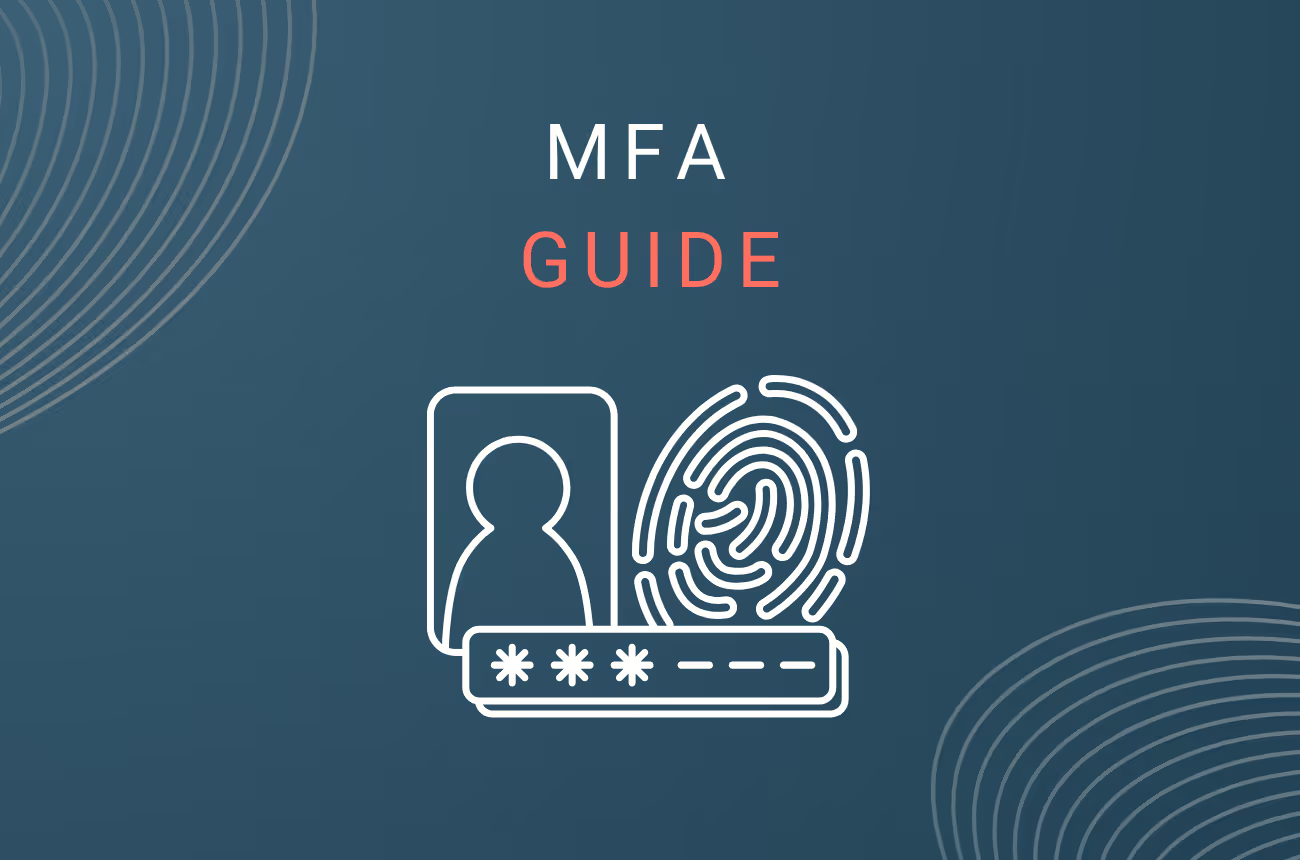
MFA and 2FA are based on a combination of different authentication factors, which can be divided into three main categories:
- Knowledge Factors: Information that only the user knows, such as passwords, PINs, or security questions.
- Possession Factors: Physical objects that the user owns, such as smartphones, hardware tokens, or smart cards.
- Inherence Factors: Biometric features that are unique to the user, such as fingerprints, facial recognition, or voice recognition.
A typical example of 2FA is the combination of a password (knowledge factor) with a one-time password that is sent to the user's smartphone via SMS (ownership factor). MFA can also incorporate other factors, such as biometric data (intrinsic factor), to further increase security.
Common multi-factor authentication techniques
There are various methods of multi-factor authentication, each with advantages and disadvantages. The most common methods include the following:
- One-time passwords (OTP):
- description: One-time passwords are used once and become invalid after a short period of time. They are often sent via SMS, email, or special apps such as Google Authenticator or Authy.
- Rating: OTPs offer a good balance between security and ease of use. However, they can be compromised by SIM swapping or phishing attacks.
- Hardware tokens:
- description: These physical devices generate one-time passwords or use cryptography for verification. Examples include RSA SecurID tokens or YubiKeys.
- Rating: Hardware tokens are highly secure as they are difficult to counterfeit. However, they can be lost or damaged, leading to potential access difficulties.
- Biometric authentication:
- description: This method makes use of the user's unique physical features, such as fingerprints, facial recognition, or retina scanning.
- Rating: Biometric processes offer a high level of protection and ease of use. However, once biometric data is compromised, it cannot be changed.
- Push notifications:
- description: Users receive a notification on their smartphone and must confirm or deny the authentication request.
- Rating: Push notifications are very easy to use and secure as they require direct communication with the device. However, they depend on a reliable Internet connection and are vulnerable to social engineering attacks.
- Smart cards:
- description: Smart cards are physical cards that are plugged into a reader and contain cryptographic keys.
- Rating: Smart cards offer a high level of security and are difficult to copy. However, they require specialized readers and can be impractical if users frequently work remotely.
- Behavior-based authentication:
- description: This method analyzes user behavior, such as typing patterns or mouse movements, to detect abnormalities and identify potential security threats.
- Rating: Behavior-based authentication is highly innovative and provides continuous security. However, it is complex to implement and requires extensive data analysis.
The relevance of multi-factor authentication
Implementing multi-factor authentication and 2-factor authentication offers a variety of benefits:
- Increased safety: By using multiple independent factors, the risk of unauthorized access is significantly reduced. Even if one factor is compromised, the other factors are still effective.
- Protection against phishing and social engineering: MFA and 2FA make it difficult for attackers to gain access to systems, even if they get a password.
- Easy integration: Many modern systems and applications support the implementation of MFA and 2FA, which makes integration easy.
- Improving user confidence: Users feel more secure when they know that their accounts and data are protected by multiple layers of security.
- Compliance: Many regulatory requirements and industry standards now require the use of MFA and 2FA to ensure the protection of sensitive data. A current example is the need for multi-factor authentication for sectors of critical infrastructure as part of NIS-2 regulations.
Challenges and pain points when implementing multi-factor authentication/ 2-factor authentication
Implementing MFA/ 2FA is essential, but it also poses numerous challenges that can hinder smooth deployment:
- User acceptance: Users might find MFA and 2FA cumbersome and resist the additional layer of security. It is important to convince users of the benefits and provide training to promote adoption and enable single sign-on to avoid complex multiple logins.
- Costs and complexity: Implementing MFA and 2FA can involve significant costs and technical effort. This includes both the purchase of the necessary hardware and software as well as integration into existing systems.
- Technical issues: Integration issues and technical difficulties can make implementation difficult. It is important to carry out a careful planning and testing phase to minimize these issues.
- Balancing security and ease of use: It is a challenge to find a solution that is both secure and easy to use. An implementation that is too complex can scare users away, while an implementation that is too simple may not provide the desired level of security.
Best practices for implementing MFA/2FA
In order to still ensure a successful implementation of multi-factor authentication/ 2-factor authentication, there are a few best practices to consider:
- Risk analysis and planning: Conduct a comprehensive risk analysis to determine your organization's specific security requirements. Plan the implementation carefully to ensure that all relevant factors are considered.
- Choosing the right methods and tools: Choose authentication methods and tools that meet your organization's needs and resources. Consider both safety requirements and ease of use.
- Training and communication: Educate and educate your users about the benefits and proper use of MFA and 2FA. Effective communication is critical to driving adoption and ensuring users understand and support new security measures.
- Regular inspection and maintenance: Regularly review the effectiveness of your MFA and 2FA solutions and adjust them as needed. Make sure that all components of the authentication solution are up to date and that security gaps are fixed in good time.
Technological trends and future developments
The landscape of authentication technologies is constantly evolving. Some of the future developments and trends that could shape the future of MFA and 2FA include:
- Advanced biometrics: Advances in biometrics, such as the use of iris scanning or behavioral biometrics, could further increase security while improving usability.
- Behavior-based authentication: This method analyses user behavior, such as typing patterns or mouse movements, to identify abnormalities and identify potential security threats.
- Passwordless authentication: The increasing use of passwordless authentication methods that rely on biometric data or one-time passwords could reduce dependence on traditional passwords and increase security.
- Integrate AI and machine learning: The use of artificial intelligence and machine learning could help to identify suspicious behavior at an early stage and take preventive measures.
Conclusion
Implementing multi-factor authentication (MFA) and two-factor authentication (2FA) is an essential step to significantly increase the security of IT systems and sensitive data. Despite implementation challenges, such as user acceptance, costs, and technical complexity, the benefits outweigh them. MFA and 2FA offer significantly higher security, protect against phishing and social engineering, and meet regulatory requirements.
A particularly effective approach is the combination of single sign-on (SSO) with integrated MFA, as offered by Bare.ID. This solution allows users to securely access multiple systems with a single login, while using additional authentication factors to increase security. This not only improves usability, but also reduces the risks associated with multiple passwords.
Companies that integrate MFA and 2FA into their security strategies can better protect themselves against cyber attacks while building user trust. With the constantly evolving threat landscape, it is essential to stay up to date with the latest technology and to continuously review and improve security measures. The integration of solutions such as SSO with MFA is a future-proof and user-friendly way to meet growing IT security requirements.
Contact the Press Team

Lea Stahl
marketing@bare.id